Showing posts with label china. Show all posts

Friday, April 4, 2008

Limitless Chinese ambition...


By now you might have gathered that I have a slight obsession with China. This country is a force that is gaining unprecedented momentum everyday. Their massive manpower combined with ever increasing organization and productivity makes for one very strong nation.

This month in National Geographic the Wenzhou people are profiled. The Wenzhou hail from a province (Zhejiang) on the far eastern coast of China bordering the East China Sea. What is unique about this culture is the EXTREME business sense and entrepreneurship these people demonstrate. I honestly can't believe some of the things I am reading in this article.
"Recently, Wenzhou's Fortune Weekly conducted a survey of local millionaires. One question was: If forced to choose between your business and your family, which would it be? Of the respondents, 60 percent chose business, and 20 percent chose family. The other 20 percent couldn't make up their minds."

This is astounding! It is a culture that upholds industry and production above anything else. In Zhejiang, every town has a specific good that it produces. Instead of the centralized manufacturing that occurs in the rest of the world, China is focusing on specialty factories that dominate entire towns. Take these specific examples from the article:
Qiaotou's population is only 64,000, [note: this is about the pop. of Terre Haute] but 380 local factories produce more than 70 percent of the buttons for clothes made in China. In Wuyi, I asked some bystanders what the local product was. A man reached into his pocket and pulled out three playing cards—queens, all of them. The city manufactures more than one billion decks a year. Datang township makes one-third of the world's socks. Songxia produces 350 million umbrellas every year. Table tennis paddles come from Shangguan; Fenshui turns out pens; Xiaxie does jungle gyms. Forty percent of the world's neckties are made in Shengzhou.

And this increasing industrialization means BIG changes for Chinese infrastructure and population dynamics. What was once a rural and agrarian country is now growing at enjoying economic growth exceeding 11% annually!!! And this juggernaut has had the fastest growing economy for over 25 years running!!! And this is growth is having a profound effect on Chinese migration:
The economy is fueled by the largest migration the world has ever seen: An estimated 140 million rural Chinese have already left their homes, and another 45 million are expected to join the urban workforce in the next five years.

Those are some truly phenomenal numbers. Keep in mind that 140 million is about half of the ENTIRE U.S. POPULATION! And this massive migration has forced the construction of instant "just-add-water" cities that include dormitories for workers, factories, and basic necessities in a just a few months. In some cases, roads are built before manhole covers, streetlamps, or sidewalks are available and workers are moved into a city months before hospitals and clinics are opened.

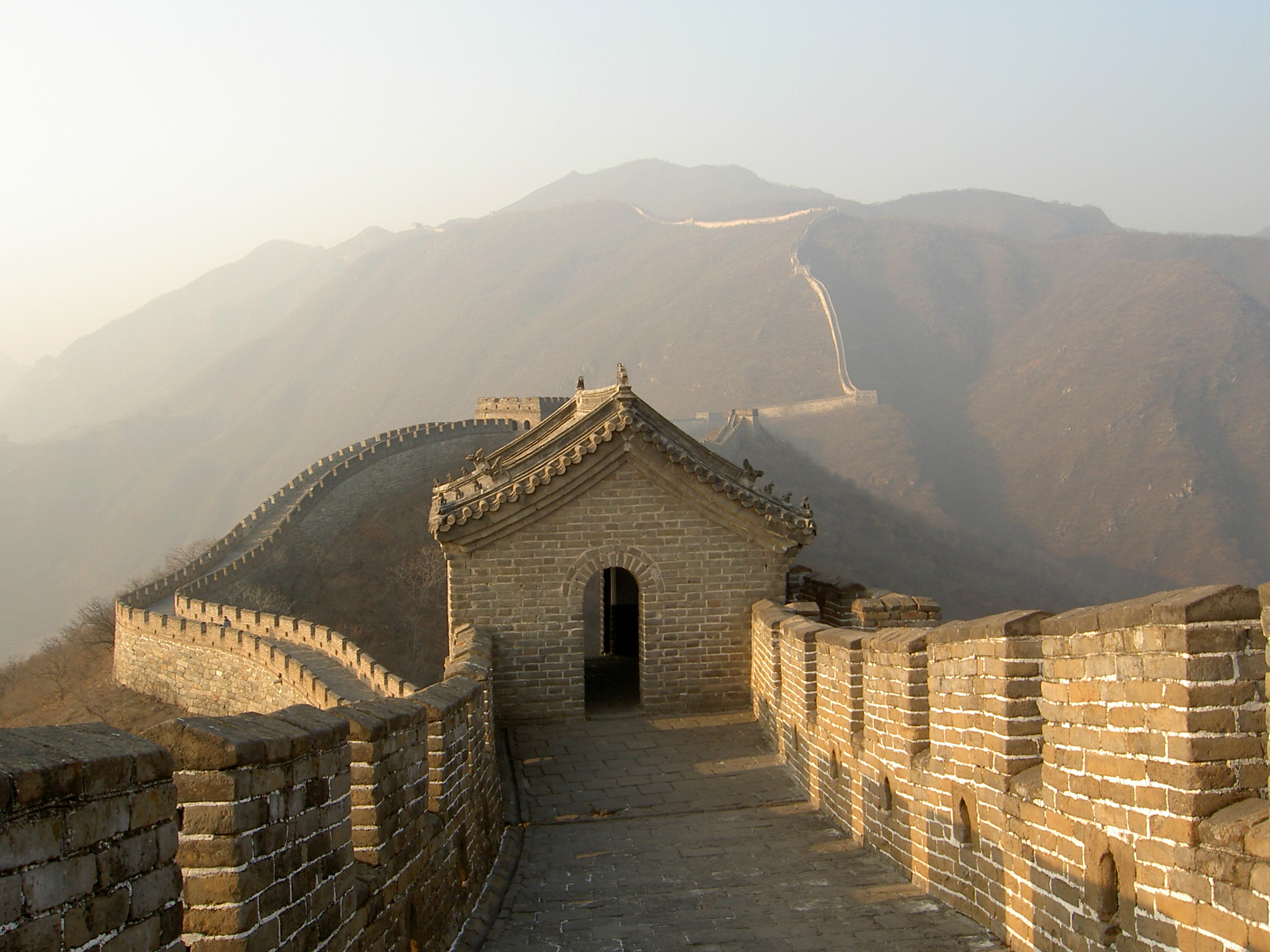
And the money for these ventures is coming from loans by state-owned banks that are funded through the central government. Normally this sort of growth is slowed by lowered demand for goods, but in China's case there has been no abating the world's insatiable hunger for consumer products. Remember, these are the people that built The Great Wall, a structure that is visible from space and was constructed between 200 BCE and 1600 AD (long before any modern machinery was available). As long as the rest of the world is consuming, China is going to continue growing...

Tuesday, April 1, 2008

Keeping perspective


One of my interests is keeping track of world population and consumption dynamics. This ties in with the whole idea behind Peak Oil, the rapid acceleration of Asian markets, and American over-consumption. Here in the U.S. we are so used to having what we want, when we want it, I think it can be easy to forget that not everyone in the world has such luxury.

Let's run some numbers.

The entire population of the world is estimated by the UN at 6,671,226,000 (6.6 billion)

Countries ranked by population:
1. China - 1.32 billion (about 19.84%)
2. India - 1.12 billion (about 16.95%)
3. United States - 300 million (about 4.6%)
4. Indonesia - 225 million (about 3.5%)
5. Brazil - 186 million (about 2.8%)

A 2005 study stated that 86% of the world's energy consumption comes from non-renewable fossil fuels (petroleum, coal, natural gas). This is troubling. As a species, humans are ravenously consuming resources that have taken trillions of tons of biomass and millions of years to accumulate. It's like a kegger where everyone is doing kegstands but didn't bring money to buy more beer. And America is the loud, fat obnoxious guy who considers it his personal mission to drink more beer than anyone else IN THE WORLD.

Energy consumption by country (in thousand barrels oil per day):
1. United States - 20,687
2. China - 7,273
3. Japan - 5,159
4. Russia - 2,861
5. Germany - 2,665

Obviously there is a disparity here as China has over FOUR TIMES as many people, yet still consumes less than us. From our perch as the only world superpower, it's easy for us to get away with this. But I don't believe we are going to be the only one for long. The next 50 years are going to be very pivotal in human history as powers are already shifting and tensions between nations are becoming strained as petroleum dwindles.

The only solution I see is wiser energy policy. This includes a two-step approach:

1) Use less energy!
- this is a no-brainer. Efficiency will be our friend once energy prices begin to climb to unmanageable levels. Instead of hulking SUVs and infrastructure built around road travel, take a cue from Europe and consider rail transit (which is another blog post all by itself) or

2) Research new energy sources!
- another obvious one. This whole situation can be made manageable if we look to the future without oil and begin to probe new avenues. This is happening already, but this process could be helped by wiser investing in research (the government investment in biofuel is ridiculous and cost ineffective). If we use fossil fuels as a springboard to advance research in new energy production methods, we could make it out of the crisis yet.

Tuesday, March 25, 2008

It's trickling down already...


For those of you wondering when/if we are going to see the effects of the current recession and the skyrocketing price of gasoline, it's happening already. Let me tell you a story...

While shadowing today I talked at length with a patient who owns a restaurant. Or I should say currently owns a restaurant, because the future of this small business is in doubt. After over two decades of friendly service, this cozy haven is perilously close to shutting its doors.

When I asked the owner what he blamed for his misfortune he had one simple answer: gas prices. Apparently this man is extremely fastidious with his bookkeeping and can trace the slow decline of his profits as they juxtapose the ever swelling price of gasoline. He explained to me that he recently looked at his records and saw a startling correlation between the cost of gas and his customer base.

According to him, a little over three years ago (2005) the price of gas jumped from ~$2.30/gal to ~$2.90/gal (a 26% increase). After this spike, he saw business at his restaurant drop off by 30%. Well, although the loss was tough he kept trucking ahead. Then gas jumped again, from ~$3.00/gal to the current price of ~$3.35/gal (a 12% increase). Again, he saw business plummet by another 30%. He is now clinging to what little income he is drawing from the restaurant and will likely shut the doors permanently soon.

And gas isn't the only reason people are going out less. There is simply less expendable income for the average person. With rising inflation, the average American budget just doesn't have enough pocket money to go out anymore.

Picture a young newlywed couple. In previous decades they would usually have $20-60 to spend on the weekends (dinner, movie, drinks). Now this money goes to fill a gas tank. And that amount of money couldn't even buy dinner and a movie these days to begin with ($9.00 for a single movie ticket?!?! I'll borrow my buddy's pirated copy, thanks).

And this brings up the issue of previous recessions. "But, but, but, recessions have occured in the past! Look at the early 2000s after the dot-com burst! We recovered from that because of Dubya! Yee-Haw!"

Don't count on that this time. We recovered from previous recessions because we still wielded unparalleled power on the world economic stage. No longer. Where previously we were the biggest oil market in town (and so saturated in cheap oil we might as well have bathed in it) now we are in direct competition with the Big Red Dragon - China. Now, China hasn't yet reached the absurd amounts of consumption we are accustomed to, but they will if given opportunity. This means that when the big swinging dicks of OPEC are looking to shill out their black gold, they can now go with the highest bidder where there was previously only one buyer in the market (US).

So what does this mean in the long run? Well don't expect gas prices to go down, that's for sure. And those days of long car trips, affordable SUVs, and earth-rumbling RV homes are dwindling into the history books. Expect to be living by much more meager means in the future. I'm not saying it's going to be tomorrow, but just know that powers are shifting. And if you think the Middle East and China are significant powers today, well.....